
New ways of search
Over the last year we have seen some dramatic changes in the search universe. New ways of searching the internet for information have entered the public eye.
For years all we did was use Google for searching information, products and services on the web. Now there are new ways of getting information with the use of AI agents like ChatGPT, Claude, Gemini and others.
There is only a fraction of users using these new technologies, but it is growing.
AI Search is not Google AIO
I am not talking about AIO (AI Overviews) which are now integrated in the Google Search Results in over 100 countries (including the UK)
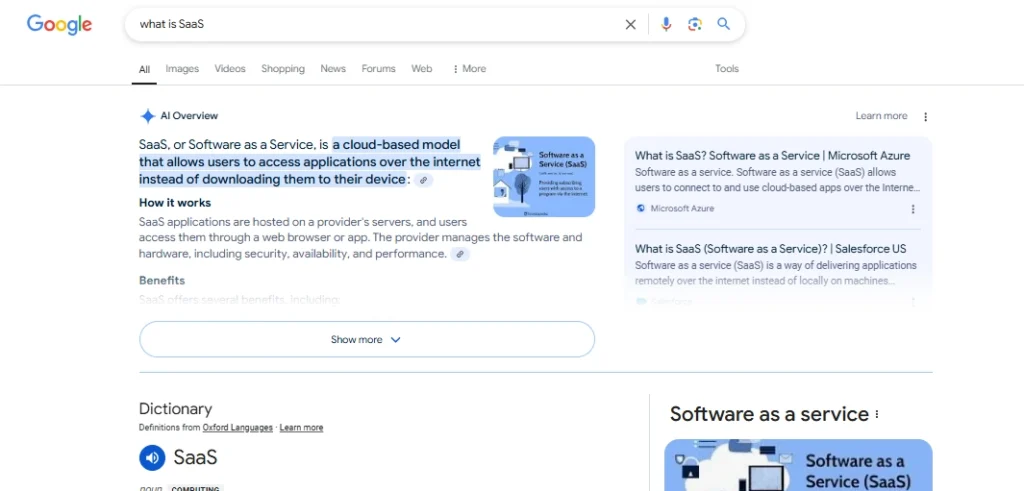
This is a new feature within Google Search and not a new way to search. It has a big impact on click trough rates and traffic that comes to websites – but this is another topic.
AI Search
Agents like ChatGPT Search (Open AI), Gemini (Google) and Claude (Perplexity) are outside the classic Google Search.
Their way of presenting answers to search requests and attribute sources is very different from what a classic search engine presents.
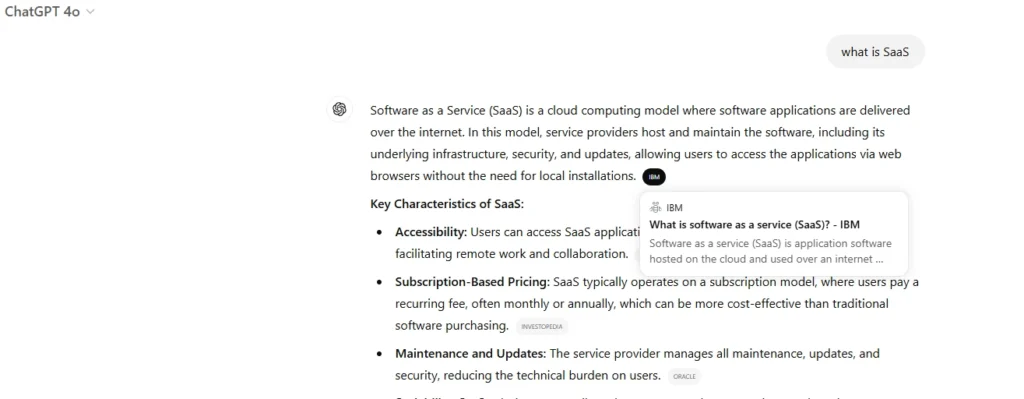
But sources are quoted and can bring users to your website and enhance brand awareness for your products or services.
The way the results are displayed differs depending on the search as we can see if we compare the above with a more product lead search query.
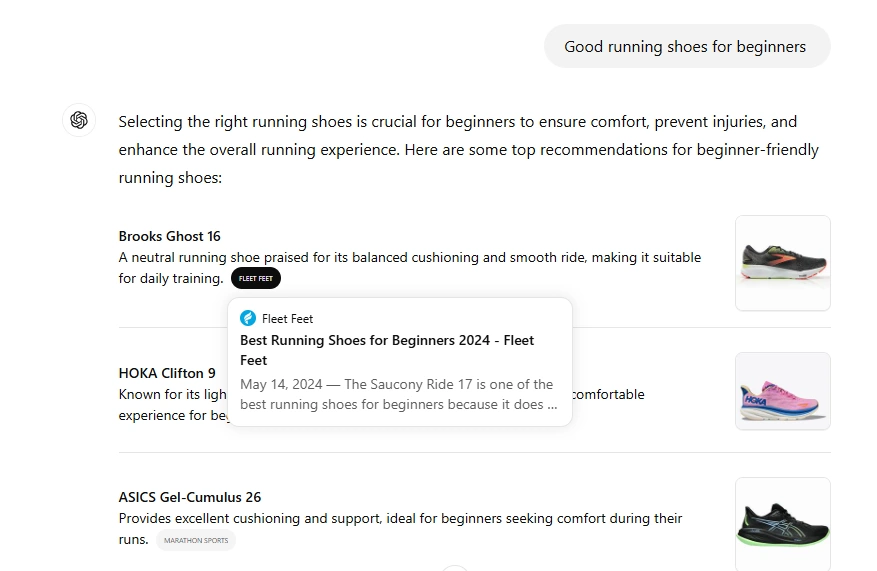
So it will become more and more important to not only look at the rankings in Google, Bing or other classic search engines, but also to monitor the traffic that comes from AI search agents.
Kevin Indig, a very knowledgeable SEO, predicts that over one third of organic traffic could come from AI agents within the next 3 years. (Read his full article here)
How much traffic do AI search agents generate?
This is just a snapshot as the AI search is growing rapidly at the moment. But case studies show that up to 4% of organic traffic can be attributed to AI search agents.
My own research shows (as of December 2024) a range between 0.01% and 1.59%.
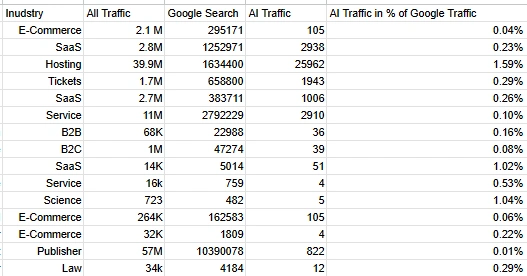
While these numbers are still small, the potential growth should let us all pay attention to this new channel of traffic for our websites.
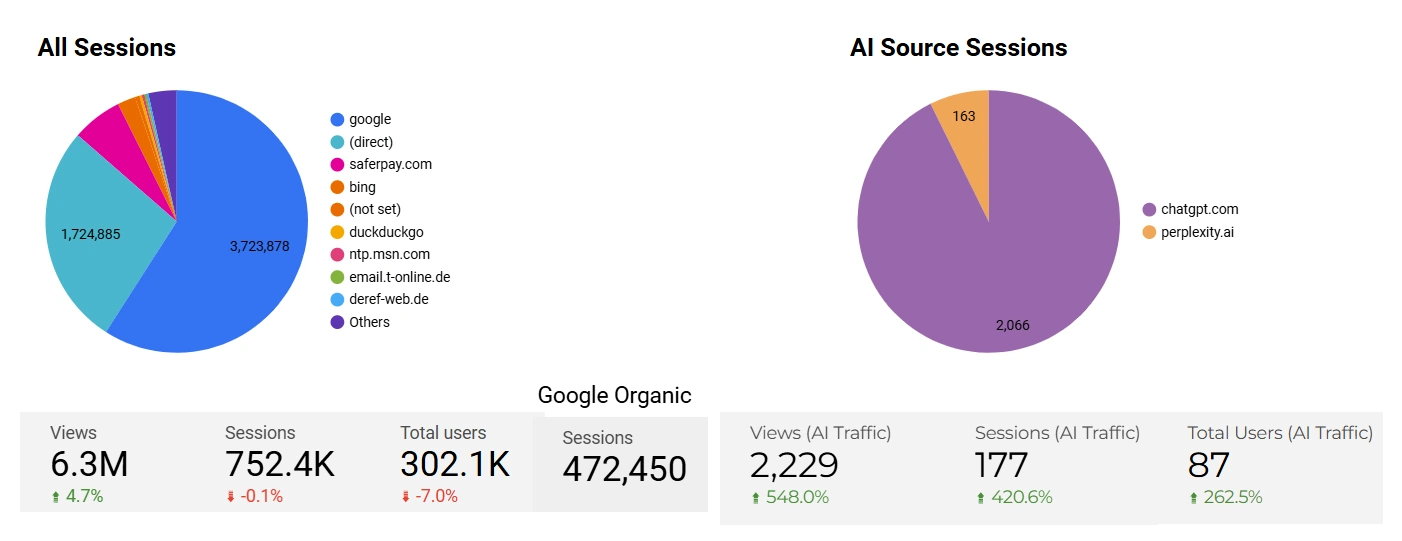
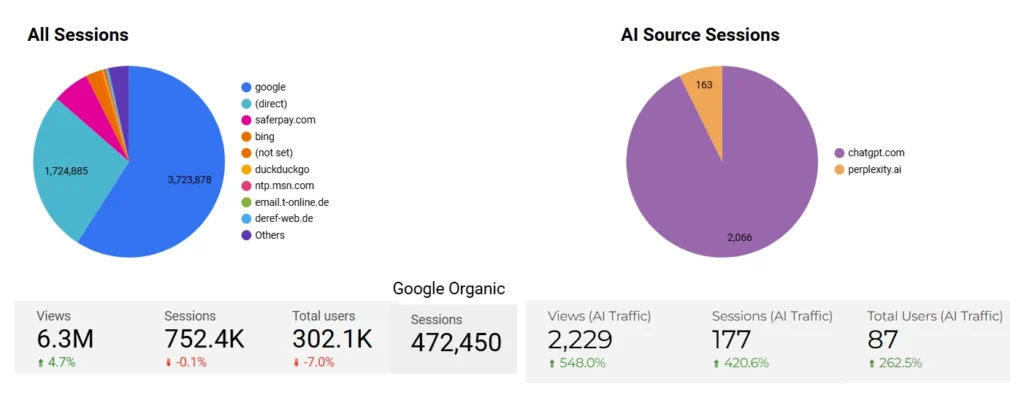
Especially when looking at the development in recent months. The Screenshot shows the difference between the more or less stagnant numbers for overall traffic vs the rapid growth in organic AI traffic since October 2024 for a client’s website.
What Can We Do and How Do We Prepare?
First, we must monitor the situation. As with any change, data is essential for informed decision-making. Monitoring traffic from AI agents is relatively straightforward using GA4. (You can find Looker Studio templates online, including one I’ve created.)
However, determining why specific content appears in AI search results remains challenging. To address this, we may need to expand our toolkit. Alongside GSC and GA4, we should utilize Bing Webmaster Tools, as ChatGPT Search relies on Bing results.
Additionally, we must rethink some practices. Google has long been able to process content served via JavaScript, but none of the current AI crawlers can render JS. As a result, content served through JavaScript may not be visible to AI crawlers.
In summary, while the landscape is changing, the core principles remain the same. As SEOs, we must ensure content is unique, useful, and easy to understand for both users and crawlers—whether they are AI-driven or traditional search engines. By adhering to these fundamentals, we position ourselves on the “sunny side” of this evolving paradigm.