
I searched Google for in-ear headphones under £100. Following one recommendation through the AI Overview took me to a pair at John Lewis for £49. Following the recommendation with the same product name in AI Mode eventually took me to John Lewis too, but to a different model at £79.96.
The AI Mode answer had shown a £99 offer along the way.
There are several things going on there. Different sellers can charge different prices, and more than one pair of headphones can answer the same question perfectly well. Neither is particularly surprising.
But if an answer names one product and the buying link takes you towards another, somebody still has to work out what they’re looking at.
That somebody is the buyer.
This started with an example from a presentation I made in 2025. At the time, Google’s AI Mode produced a shortlist and links to comparison articles, but the captured answer wasn’t particularly helpful with prices or where to buy the products.
The newer results address some of that criticism. They also show why getting into an AI answer is only part of the job. What happens when somebody follows it matters too.
The ordinary Google results already do quite a lot
On 23 October 2026, I searched for:
best in ear head phones for less than £100
Google corrected the spelling (yep it has to do this quite often for me) and showed sponsored products, followed by an AI Overview with recommendations, prices and links.
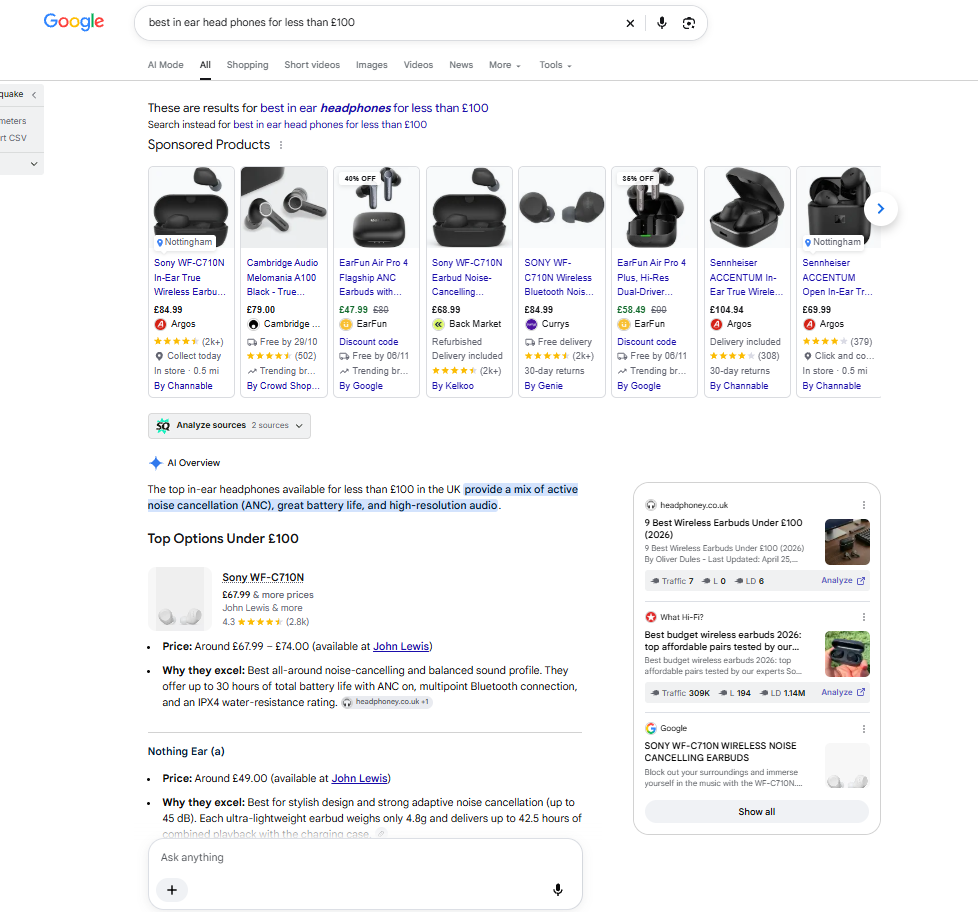
There are plenty of blue links in this screenshot. Some identify products, some lead towards retailers and others support the answer.
What you can’t see is a conventional organic listing. You have to scroll further down for those.
Before getting there, the buyer has already been shown products, prices and reasons to consider particular headphones. So when somebody tells you they rank on page one, it’s worth looking at what really sits between the search box and their result.
It also makes the division between “traditional search” and “AI search” a bit awkward. This is the ordinary results page. There’s already an AI answer in it, surrounded by shopping information and adverts.
The business paying for a product advert, the publisher being cited and the manufacturer getting its headphones recommended are all present. But they haven’t achieved the same thing.
I followed the links
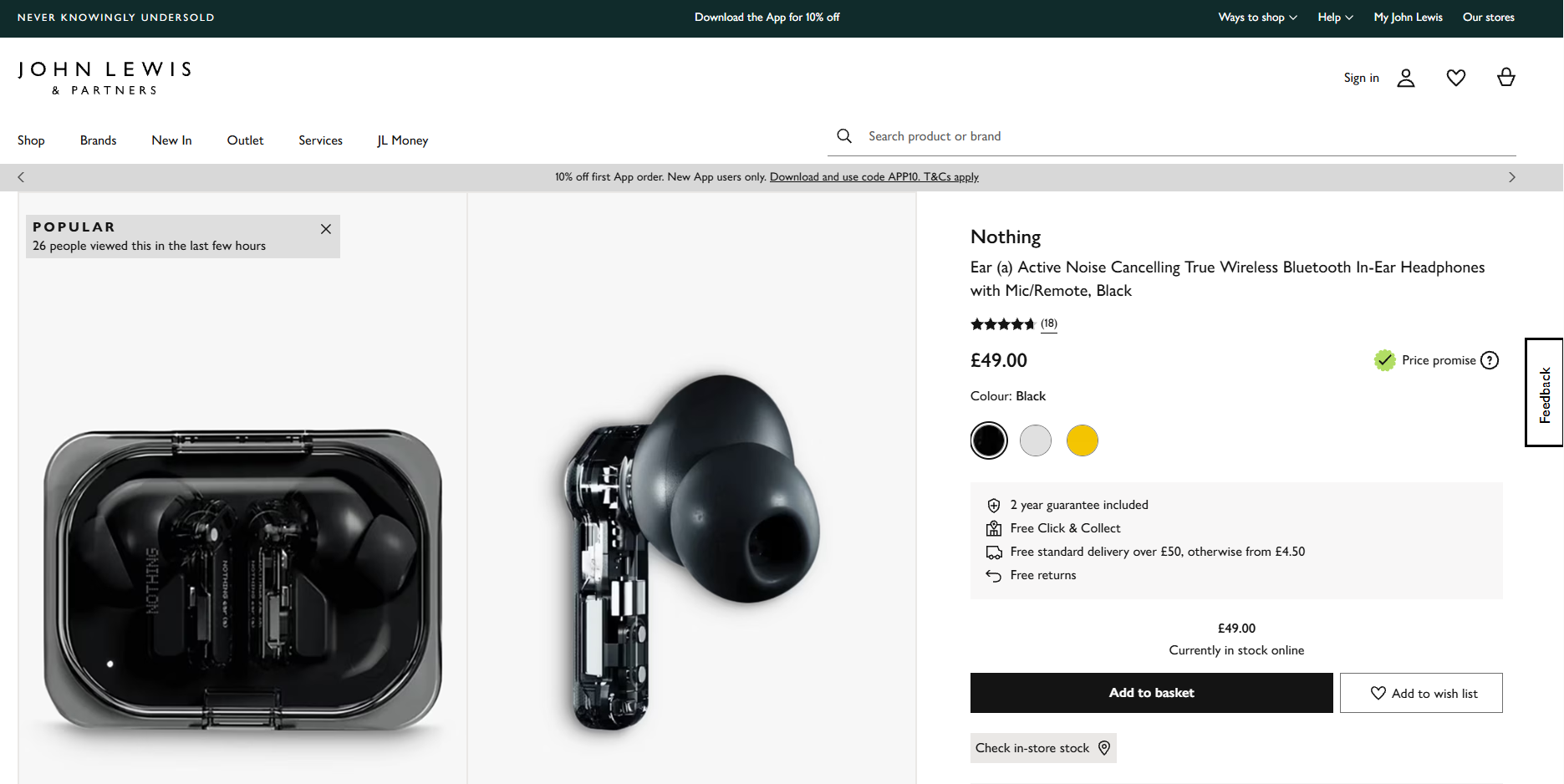
In the AI Overview, Nothing Ear (a) appeared with a price of £49 and a link to John Lewis. OK cool let’s have a look.
That link took me to a John Lewis page identifying the product as Nothing Ear (a), in black, at £49. The page said it was in stock. The product name and price lined up with the recommendation.
AI Mode also included a recommendation labelled Nothing Ear (a), this time with a £99 offer.
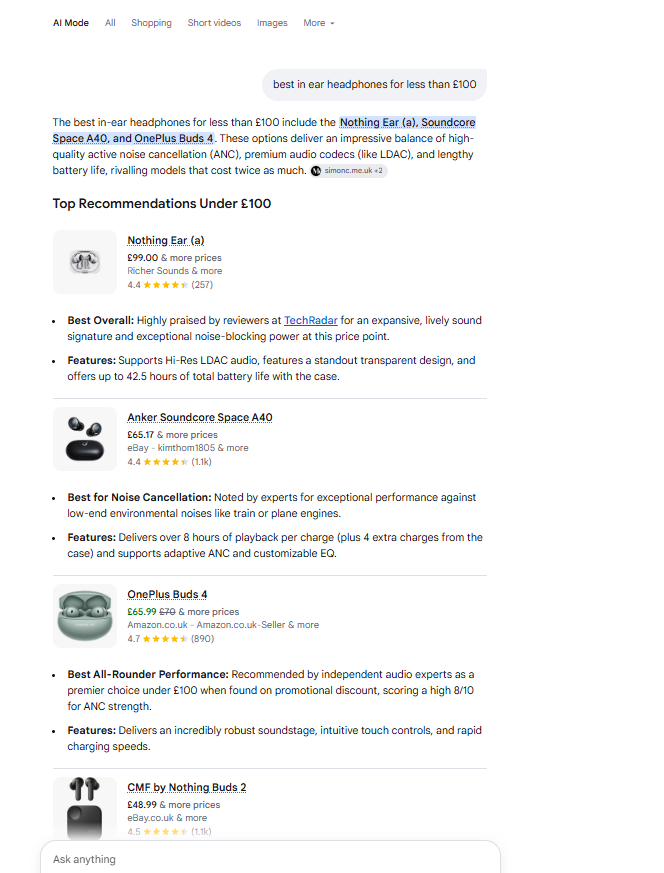
Following that product link took me to a Google shopping page. Its heading was fairly generic, but the description and several merchant offers referred to Ear (3a). WTF – that is not the same product that was shown before.
From there, the John Lewis offer took me to a page for Nothing Ear (3a), in white, priced at £79.96. – And now a different price.
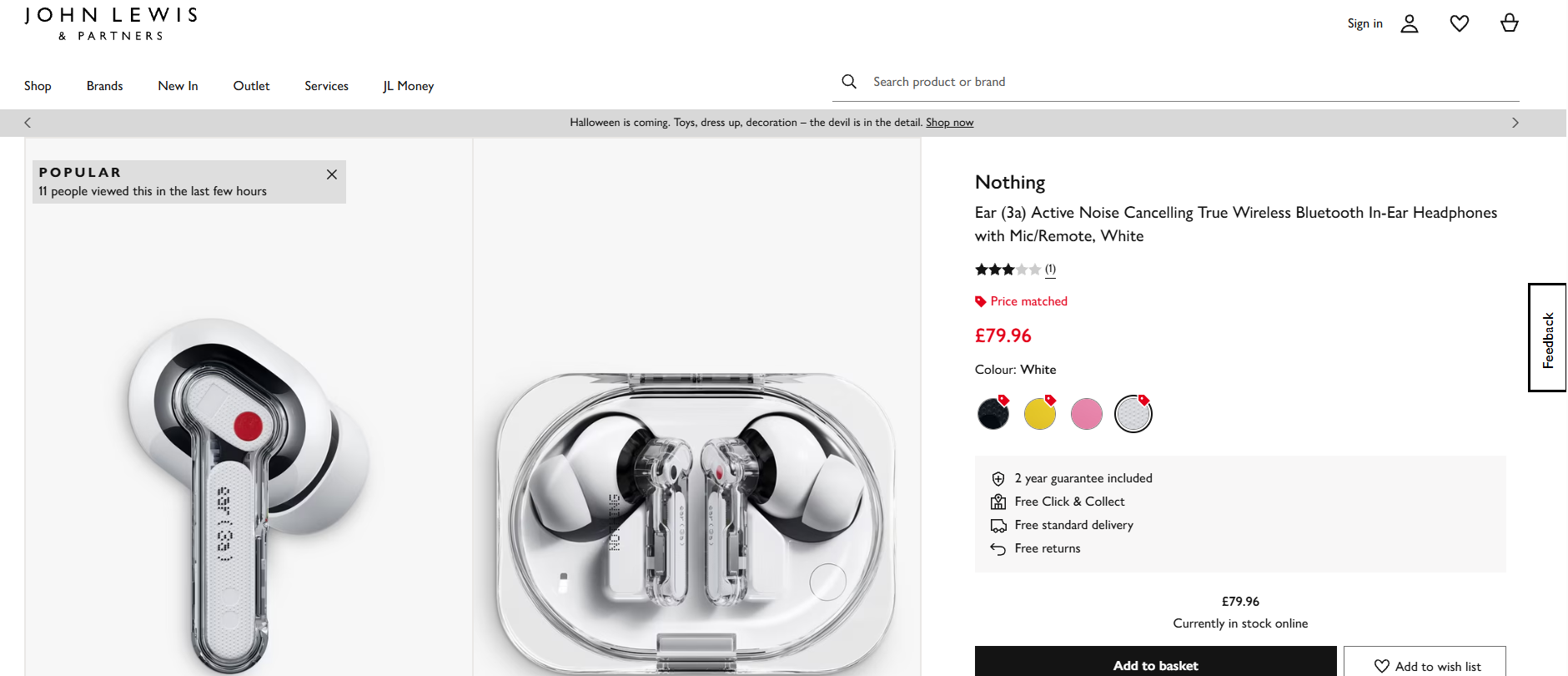
Here are the two routes:
| Route | Recommendation shown | Buying destination |
|---|---|---|
| AI Overview | Nothing Ear (a), £49 | Directly to John Lewis: Ear (a), £49 |
| AI Mode | Labelled Nothing Ear (a), £99 | Google shopping page, then John Lewis: Ear (3a), £79.96 |
The £99 and £79.96 figures don’t automatically indicate a pricing error. The Google shopping page contains offers from different merchants.
The product name is the more interesting problem. The AI Mode recommendation said Ear (a), while the route I followed ended at Ear (3a).
I can show where the names stop matching. These screenshots don’t tell me which part of the system introduced that mismatch, and they don’t justify blaming a retailer’s feed or a manufacturer’s website.
They do show that the buyer has some checking to do.
Different recommendations are fine. Unclear product matching not so much
There isn’t one correct answer to “best headphones under £100”. Different products suit different people. Two answers can recommend different headphones and both be useful.
But once the answer names a particular model, I’d expect the product link to keep track of it.
Otherwise, the buyer has to notice the change, work out whether the models differ and decide whether the explanation they just read still applies.
That matters when the answer has already presented a product as “best overall”, described its features and attached a price and rating. It looks like a fairly complete recommendation. You could easily assume the product behind the link is the one being discussed.
This is a small example, not a study of Google’s accuracy. The screenshots record particular results on a particular day. My original 2025 example also used a dollar budget, so this isn’t a controlled before-and-after test.
It is enough to show why I’d follow the buying journey before declaring an AI result useful, accurate or commercially valuable.
A citation report won’t show you all of this
A report could record that Nothing appeared, that a review website was cited and that John Lewis had an offer.
All true. Still quite a lot missing.
Which model appeared? What did the answer say about it? Did the source support that description? Where did the product link go? Could the buyer understand the offer when they got there?
I’ve written before about checking whether AI actually understood your brand. This is another good reason to do it. Finding the name or URL is useful, but you need to look at what happens around it.
Both routes here eventually reached John Lewis. We haven’t shown that one retailer won a sale at another’s expense. We haven’t shown a sale at all.
We have shown different routes putting different products and offers in front of the same buying question.
That is worth knowing if you’re the manufacturer, retailer or publisher involved. It is rather more useful than another screenshot celebrating that you were mentioned.
You still need to explain why somebody should buy from you
Getting the product identity right is the starting point. The buyer still has to choose.
A price helps, but what does it include? Is it the right model and condition? What happens with delivery? Can I return it? Why should I trust this seller?
The John Lewis screenshots make some of those details visible: a two-year guarantee, Click & Collect and returns information. The £49 product page also says standard delivery is free over £50, otherwise from £4.50.
That’s relevant to a £49 purchase. The headline price doesn’t tell you everything about the cost of getting it.
For a manufacturer, the useful work may be explaining the difference between models. If names are similar, make it easy to compare them. What changes? Who benefits? Is there a reason to spend the extra money?
For a reviewer, it may be the testing behind a recommendation. “Excellent sound quality” doesn’t get us far. Most headphone pages are quite enthusiastic about the sound quality.
How well does the microphone work in a noisy office? Are they comfortable through a long call? How was noise cancellation tested? What didn’t work particularly well?
Those details give the buyer something to judge.
“The best of the best” still isn’t an explanation
One of the closing images in my presentation uses the Men in Black interview scene:
“The best of the best of the best, sir.”
There’s a lot of website copy that works along that line.
Premium products. Exceptional service. Leading experts. Bla, bla, bla. Everybody seems to have assembled a remarkable business, judging by the About pages.
But what can you show me?
Explain the comparison. Show the test. Tell me where the product doesn’t fit. Explain what happens when the service gets difficult.
Don’t repeat what’s out there. Highlight what sets you apart.
That doesn’t mean rewriting every fact until it sounds unique. Product names, specifications, prices and availability should stay consistent. A creative interpretation of the model number isn’t going to help anyone.
The difference should come from what you know, what you can demonstrate and what you actually offer.
Google’s own Merchant Center guidance requires submitted prices to match the landing page and checkout. Keeping the basic information straight is already part of the work. Here are the price requirements.
You cannot control every answer or every product association a platform generates. But you can make your own information clear, check how it is being used and give people something solid to assess when they reach you.
Look beyond the position and the mention
The normal results screenshot also brings us back to clicks. A conventional organic listing can sit below quite a lot of explanation, advertising and shopping information.
The buyer may still need that page. They may already have enough to act. The ranking alone won’t tell you.
Pew Research Center’s analysis of browsing by 900 US adults in March 2025 found traditional-result clicks on 8% of visits to Google pages with an AI summary, compared with 15% without one. That is historical, observational evidence, not a percentage to apply to every business. You can read the research here.
I went into the problems with simple traffic forecasts in my review of AccuRanker’s CTR research. Position needs context. So does an AI mention.
A recommendation could influence somebody without producing an immediate referral. Equally, a mention could do very little. We need to be careful about inventing invisible success because we can’t measure the journey.
Pick a buying question and follow it through
You don’t need a complicated framework to start checking this.
Pick a question that matters to the business. Look at what appears, read the answer and follow the links. Check what the buyer actually reaches.
Then look at your own pages. Do they explain the product or service properly? Can somebody compare the options? Are the offer and its limitations clear? What would they still have to ask your sales or support team?
This works beyond headphones. A software buyer may need to understand implementation work and integration limits. An industrial buyer may need to establish whether a product suits a particular environment. Being recommended gets you into consideration. There is still a decision to help with.
There’s useful information for the business in that investigation too. A feature gets described badly. A competitor has an explanation you don’t. The same buying question keeps going unanswered.
Check those observations against actual enquiries and customer conversations. Whatever Google generated is not automatically what your customers think.
That is part of what I mean when I talk about SEO as customer and market intelligence. We should be using what we find to improve the information, the offer and the decisions behind them.
In this example, the same query led through two Google interfaces to different models at the same retailer. A neat report about rankings or citations would struggle to explain much of that.
Following the links did.
And when somebody reaches your business, you still need to give them a reason to choose you. Preferably something more useful than “the best of the best”.